

Business travel is more than an administrative process and expense management. Data on travel routes, modes of transport, trip duration and accommodation can also provide valuable insights for ESG reporting and help calculate CO₂ emissions associated with business travel.
At BDO in Ukraine, the business travel process has been automated to capture the required data at source and enable its reuse for a range of business purposes. The solution is built on Microsoft Dynamics 365, Dataverse, Power Automate, SharePoint, Excel and Microsoft Azure Maps.
This approach brings business travel management, accounting review and ESG data preparation together in a single digital environment.
Business travel automation enables structured data on travel routes, modes of transport, trip duration and accommodation to be captured as part of the travel process. This data can then be reused to prepare ESG metrics and calculate CO₂ emissions from business travel, without the need for additional manual data collection.
This approach forms the basis of the automated business travel process implemented by BDO in Ukraine.
At first glance, business travel may seem like a standard administrative process. In practice, however, the business travel process generates a significant amount of data, including employee details, travel dates and routes, modes of transport, accommodation and expenses, supporting documents, and approval records.
When managed manually, this data is often scattered across different forms, files and documents. Employees enter the required information, accounting teams review it, and if some of the data is needed for ESG reporting, it must be retrieved, verified and consolidated again. Before BDO in Ukraine automated the business travel process, collecting ESG data could take several months.
The key objective of business travel automation was therefore not simply to digitise existing forms, but to create a structured data model that would enable the data to be reused for different business purposes.
The key principle behind the solution is that a single set of structured data can be used for multiple business purposes without the need to enter the same information again.
Employees do not need to complete a separate form for ESG reporting, while those responsible for preparing ESG data do not need to collect information on travel routes and trip details again.
In BDO in Ukraine’s automated business travel process, structured travel data is initially used for core operational purposes: arranging business trips, generating the required documentation, reviewing expenses, and completing the business travel process.
The same data can then be reused for other business purposes, including ESG reporting.
The system already captures structured data on modes of transport, travel routes, departure and arrival points, journey times, and accommodation dates. This data can therefore be used to generate ESG metrics without the need for a separate data collection and entry process.
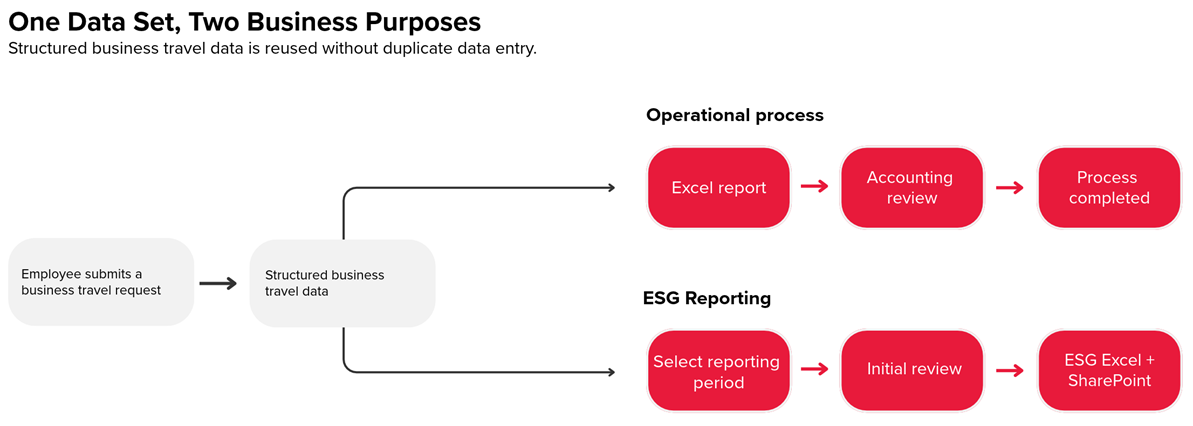
Fig. 1. How business travel data is reused across the business travel process and ESG reporting
This approach is fundamentally different from a model in which an ESG specialist collects data separately across different business units, reconciles spreadsheets, and manually compiles the required data set.
The automated business travel process at BDO in Ukraine is built on Microsoft Dynamics 365 and Dataverse, supported by Power Automate, SharePoint, Excel and Microsoft Azure Maps. Each technology serves a specific purpose while working together as part of a single digital workflow. At the core of the solution is a centralised business data model stored in Dataverse.
Some corporate information is automatically populated from existing employee data, while calculated values are generated by the system. Once the approval process begins, the relevant fields are locked to prevent changes during the review. If the document requires revisions, editing is re-enabled.
For each expense type, users see only the relevant fields. For example, ticket expenses include the mode of transport and travel details, while accommodation expenses include the address and dates of stay. Other expense types display the corresponding set of required fields.
This simplifies the user experience while enabling the business to capture structured data that can be reused for further automated processing.
For example, users may enter the same city as “Варшава”, “Warsaw” or “Warszawa”. While these names clearly refer to the same location, an automated system may recognise them as separate entries.
To address this issue, Microsoft Azure Maps has been integrated into the business travel process. Users enter a city name and select the relevant location from the search results. The system then stores the standardised location name, country and geographical coordinates.
For each mode of transport, the relevant travel details are captured in a structured format. For example, an air journey can consist of multiple segments, with the departure and arrival points, date and time recorded for each segment. This makes it possible to account for connecting flights and capture each part of the journey as structured data rather than as a single free-text route description.
This structured approach enables the data to be reused beyond the initial business travel process.
Once the approval process begins, Power Automate uses the structured data stored in the system to automatically generate an Excel file based on the corporate template.
The accounting team can review the business travel record in Dynamics 365, the generated document, related expenses and supporting documents. If changes are required, the record is returned to the employee with comments for revision. Once the necessary changes have been made, the system generates a new version of the document.
The entire cycle, including approval, revisions, document regeneration and completion, takes place within a single controlled business travel process.
Once the business travel process is complete, the system already contains some of the structured data required to generate ESG metrics. There is therefore no need to collect this data from employees again or consolidate it from separate spreadsheets.
A dedicated data workflow is available for the ESG manager. The user selects the required reporting period, after which the system generates an initial overview of company-wide data.
The data is grouped into four categories:
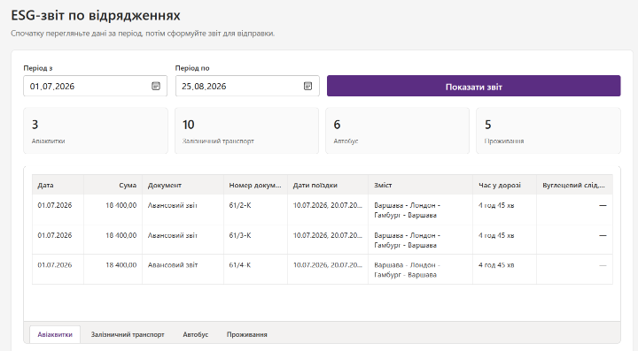
Fig. 2. Generating ESG data on business travel for a selected reporting period
For ESG reporting, business travel data can serve as activity data, which can then be used in the configured process for calculating CO₂ emissions associated with business travel.
In the implemented process, this data includes:
Once the data has been reviewed, the system uses the relevant data in the configured CO₂ calculation process and generates a centralised ESG data set in Excel. The completed file is stored in SharePoint, where users can also access previous ESG reports.
This creates a consistent end-to-end data processing flow:
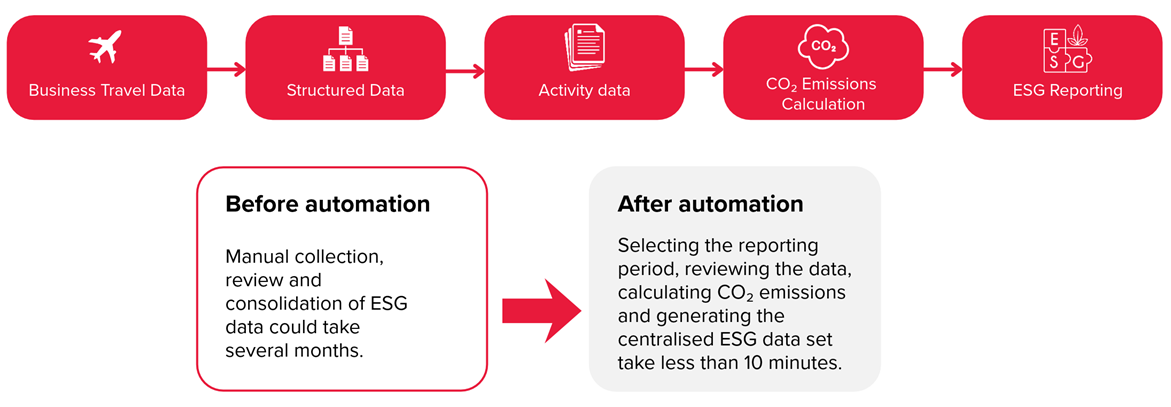
For employees, the business travel process has become more straightforward, while the accounting team now has a single point for reviewing travel records. For the ESG function, the key change has been the shift from manual data collection to reusing structured data already captured as part of the business travel process.
The figures presented relate specifically to the internal process implemented at BDO in Ukraine and may vary depending on the solution configuration, as well as the volume and structure of the data.
The value of this approach goes beyond the use of Microsoft Dynamics 365, Power Automate or Microsoft Azure Maps.
The key outcome is a consistent data model in which information is captured at source and stored in a structured format that enables its subsequent reuse across different business purposes.
This is the practical difference between simply digitising a form and automating an end-to-end business process.
If a company simply moves a paper or Excel-based form into a digital environment, it makes an individual task more efficient. However, when data is structured from the outset and integrated into a common data model, one business process can become a source of data for other business functions.
At BDO in Ukraine, data on modes of transport, travel routes, journey times and accommodation captured as part of the business travel process can subsequently be reused for ESG reporting without the need for separate manual data collection.
The approach used to automate the business travel process can be applied more broadly, beyond a single administrative process.
Companies accumulate significant volumes of data across finance, HR, procurement, logistics and other corporate systems. When this data is captured in a structured format, it can be reused across different business functions, including management reporting, ESG reporting and other types of corporate reporting.
Before creating new forms or separate data sets, companies should first identify what relevant data is already captured within existing business processes, whether it is structured, and how it can be reused across different business functions.
This approach enables companies to move beyond automating individual tasks and towards building interconnected digital business processes.
Key takeaways
When data is captured once, stored in a structured format and can be reused across different business functions, automation can do more than streamline individual operational processes. It can create a foundation for the wider reuse of corporate data, including for ESG reporting.
At BDO in Ukraine, the business travel process has been automated to capture the required data at source and enable its reuse for a range of business purposes. The solution is built on Microsoft Dynamics 365, Dataverse, Power Automate, SharePoint, Excel and Microsoft Azure Maps.
This approach brings business travel management, accounting review and ESG data preparation together in a single digital environment.
How business travel automation supports ESG reporting
Business travel automation enables structured data on travel routes, modes of transport, trip duration and accommodation to be captured as part of the travel process. This data can then be reused to prepare ESG metrics and calculate CO₂ emissions from business travel, without the need for additional manual data collection.This approach forms the basis of the automated business travel process implemented by BDO in Ukraine.
Business travel as a source of ESG data
At first glance, business travel may seem like a standard administrative process. In practice, however, the business travel process generates a significant amount of data, including employee details, travel dates and routes, modes of transport, accommodation and expenses, supporting documents, and approval records.When managed manually, this data is often scattered across different forms, files and documents. Employees enter the required information, accounting teams review it, and if some of the data is needed for ESG reporting, it must be retrieved, verified and consolidated again. Before BDO in Ukraine automated the business travel process, collecting ESG data could take several months.
The key objective of business travel automation was therefore not simply to digitise existing forms, but to create a structured data model that would enable the data to be reused for different business purposes.
The key principle behind the solution is that a single set of structured data can be used for multiple business purposes without the need to enter the same information again.
Employees do not need to complete a separate form for ESG reporting, while those responsible for preparing ESG data do not need to collect information on travel routes and trip details again.
One data set, multiple business purposes
In BDO in Ukraine’s automated business travel process, structured travel data is initially used for core operational purposes: arranging business trips, generating the required documentation, reviewing expenses, and completing the business travel process.The same data can then be reused for other business purposes, including ESG reporting.
The system already captures structured data on modes of transport, travel routes, departure and arrival points, journey times, and accommodation dates. This data can therefore be used to generate ESG metrics without the need for a separate data collection and entry process.
Fig. 1. How business travel data is reused across the business travel process and ESG reporting
This approach is fundamentally different from a model in which an ESG specialist collects data separately across different business units, reconciles spreadsheets, and manually compiles the required data set.
How the automated business travel process works
The automated business travel process at BDO in Ukraine is built on Microsoft Dynamics 365 and Dataverse, supported by Power Automate, SharePoint, Excel and Microsoft Azure Maps. Each technology serves a specific purpose while working together as part of a single digital workflow. At the core of the solution is a centralised business data model stored in Dataverse.
A single form and a controlled process
In Dynamics 365, each business travel record moves through a structured workflow, from creation and document generation to accounting review and completion of the business travel process.Some corporate information is automatically populated from existing employee data, while calculated values are generated by the system. Once the approval process begins, the relevant fields are locked to prevent changes during the review. If the document requires revisions, editing is re-enabled.
For each expense type, users see only the relevant fields. For example, ticket expenses include the mode of transport and travel details, while accommodation expenses include the address and dates of stay. Other expense types display the corresponding set of required fields.
This simplifies the user experience while enabling the business to capture structured data that can be reused for further automated processing.
Standardising travel routes and transport data
One of the key objectives is to ensure that geographical data is captured in a consistent, standardised format.For example, users may enter the same city as “Варшава”, “Warsaw” or “Warszawa”. While these names clearly refer to the same location, an automated system may recognise them as separate entries.
To address this issue, Microsoft Azure Maps has been integrated into the business travel process. Users enter a city name and select the relevant location from the search results. The system then stores the standardised location name, country and geographical coordinates.
For each mode of transport, the relevant travel details are captured in a structured format. For example, an air journey can consist of multiple segments, with the departure and arrival points, date and time recorded for each segment. This makes it possible to account for connecting flights and capture each part of the journey as structured data rather than as a single free-text route description.
This structured approach enables the data to be reused beyond the initial business travel process.
Automating document generation and approvals
Once the approval process begins, Power Automate uses the structured data stored in the system to automatically generate an Excel file based on the corporate template.The accounting team can review the business travel record in Dynamics 365, the generated document, related expenses and supporting documents. If changes are required, the record is returned to the employee with comments for revision. Once the necessary changes have been made, the system generates a new version of the document.
The entire cycle, including approval, revisions, document regeneration and completion, takes place within a single controlled business travel process.
How business travel data is used for ESG reporting
Once the business travel process is complete, the system already contains some of the structured data required to generate ESG metrics. There is therefore no need to collect this data from employees again or consolidate it from separate spreadsheets.A dedicated data workflow is available for the ESG manager. The user selects the required reporting period, after which the system generates an initial overview of company-wide data.
The data is grouped into four categories:
- air travel;
- rail travel;
- bus travel;
- accommodation.
Fig. 2. Generating ESG data on business travel for a selected reporting period
How business travel data is used to calculate CO₂ emissions
For ESG reporting, business travel data can serve as activity data, which can then be used in the configured process for calculating CO₂ emissions associated with business travel.In the implemented process, this data includes:
| Category | Activity data | Data source |
|---|---|---|
| Air travel | Flight duration | Departure and arrival date and time for each route segment |
| Rail travel | Journey time | Departure and arrival times |
| Bus travel | Distance, km | Route between geographical points |
| Accommodation | Number of days | Check-in and check-out dates |
Once the data has been reviewed, the system uses the relevant data in the configured CO₂ calculation process and generates a centralised ESG data set in Excel. The completed file is stored in SharePoint, where users can also access previous ESG reports.
This creates a consistent end-to-end data processing flow:
For employees, the business travel process has become more straightforward, while the accounting team now has a single point for reviewing travel records. For the ESG function, the key change has been the shift from manual data collection to reusing structured data already captured as part of the business travel process.
The figures presented relate specifically to the internal process implemented at BDO in Ukraine and may vary depending on the solution configuration, as well as the volume and structure of the data.
Why the data model matters more than individual tools
The value of this approach goes beyond the use of Microsoft Dynamics 365, Power Automate or Microsoft Azure Maps.The key outcome is a consistent data model in which information is captured at source and stored in a structured format that enables its subsequent reuse across different business purposes.
This is the practical difference between simply digitising a form and automating an end-to-end business process.
If a company simply moves a paper or Excel-based form into a digital environment, it makes an individual task more efficient. However, when data is structured from the outset and integrated into a common data model, one business process can become a source of data for other business functions.
At BDO in Ukraine, data on modes of transport, travel routes, journey times and accommodation captured as part of the business travel process can subsequently be reused for ESG reporting without the need for separate manual data collection.
What this case means for businesses
The approach used to automate the business travel process can be applied more broadly, beyond a single administrative process.Companies accumulate significant volumes of data across finance, HR, procurement, logistics and other corporate systems. When this data is captured in a structured format, it can be reused across different business functions, including management reporting, ESG reporting and other types of corporate reporting.
Before creating new forms or separate data sets, companies should first identify what relevant data is already captured within existing business processes, whether it is structured, and how it can be reused across different business functions.
This approach enables companies to move beyond automating individual tasks and towards building interconnected digital business processes.
Key takeaways
- Business travel data is captured once as part of the operational process and can then be reused for ESG reporting.
- A structured data model enables travel routes, modes of transport, accommodation and other activity data to be used without the need to collect the same information manually for a separate process.
- Microsoft Dynamics 365, Dataverse, Power Automate, SharePoint and Microsoft Azure Maps serve different functions within a single digital process, where operational data provides the foundation for subsequent ESG processes.
From business process automation to a data-driven approach
The BDO in Ukraine case demonstrates that the value of business process automation goes beyond replacing Excel files or paper documents with digital forms.When data is captured once, stored in a structured format and can be reused across different business functions, automation can do more than streamline individual operational processes. It can create a foundation for the wider reuse of corporate data, including for ESG reporting.