Annex B. Country Context and Key Markets
B2. Key markets: sector snapshots


B2. Key markets: sector snapshots
Economy
Key economy highlights
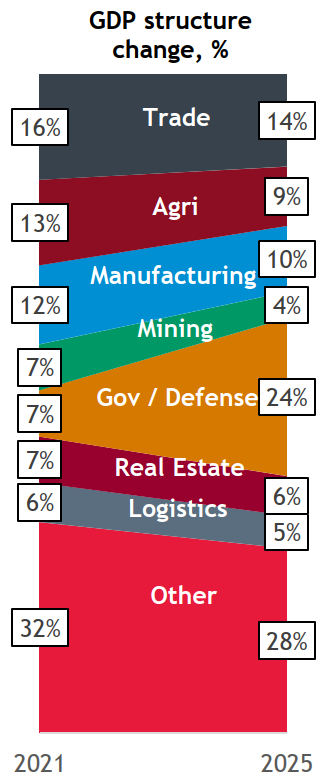
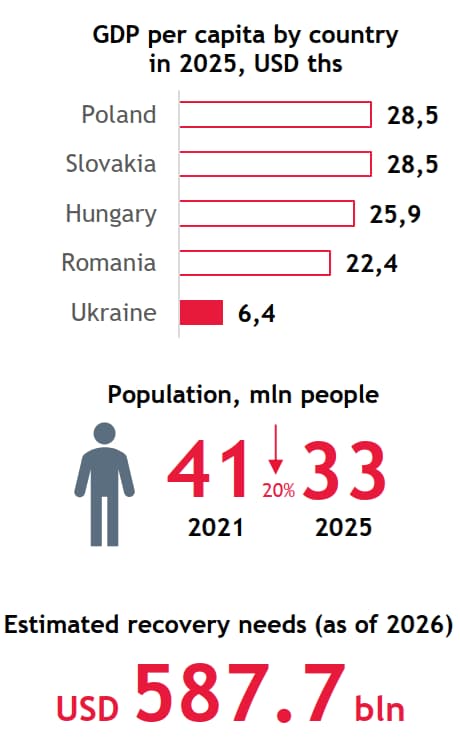
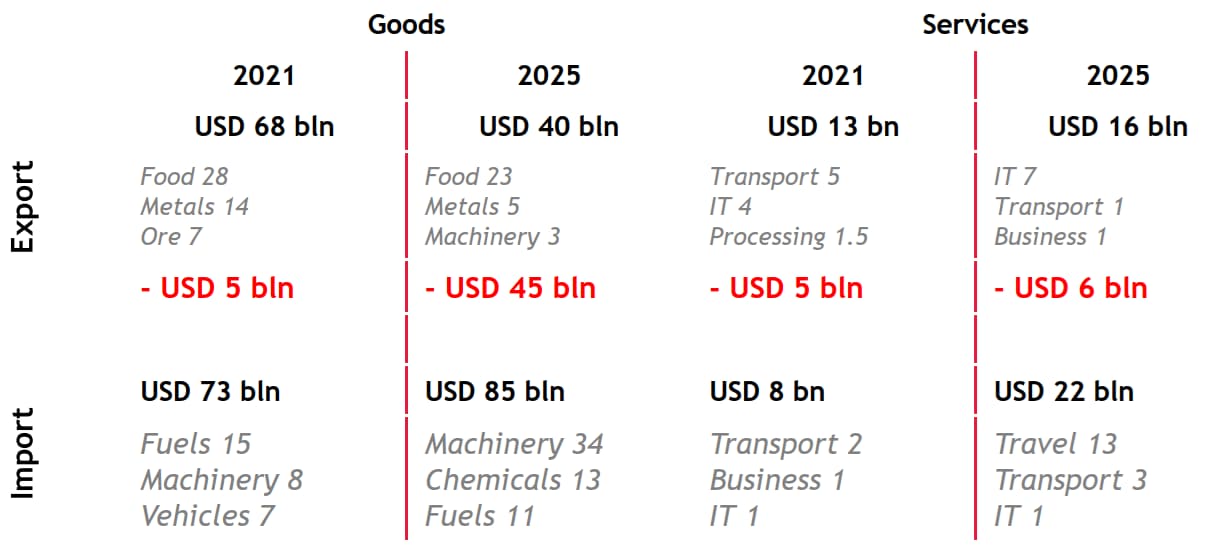
Foreign trade

Agriculture
Market size (2025): USD 18.8 bln
Market overview
The agricultural sector is one of the most important pillars of Ukraine’s economy and remains highly attractive for investment, contributing 8.8% of GDP and 56% of national exports in 2025. It benefits from some of the world’s most fertile black soils and favorable climate conditions, supported by skilled professionals and a broad mix of crop and livestock production.
Investment potential
Ukraine’s key agricultural opportunity lies in expanding value‑added processing, as limited capacity still channels much of output into raw‑commodity exports (in 2025, in raw materials vs. processed goods – 53.4% vs. 46.6%). The sector is prioritized under the Law on State Support for Investment Projects, offering up to 30% CAPEX compensation. Only ~26% of agricultural products are processed today, though available capacity could raise this to about 68%. In 2025, agricultural M&A reached USD 371 million across nine major deals, highlighting consolidation of land banks and growing vertical integration, with domestic investors still dominating despite wartime pressures
Land resources
Despite temporary occupation of some areas, Ukraine retains 26 million ha of arable and fallow land in 2024, about 70% of which is black soil. Ukraine had long history of prohibited sale of agriculture land due to a 2001 moratorium driven by lack of proper regulation. However, since 2021 individuals were allowed to buy up to 100 ha (Land reform launch), and from 2024 Ukrainian legal entities can purchase up to 10 000 ha. Farmland remains highly fragmented: most is owned by millions of small holders, while large companies largely operate through leases. Foreign investors cannot own farmland but may invest through long‑term leases or Ukrainian LLCs. The top 10 businesses control about one‑third of land owned by legal entities, still only a small share of total farmland.
Top 5 holding companies in Ukraine by agricultural land owned (2025), ths ha

Mining
Market size (2025): USD 10.2 bln
Market overview
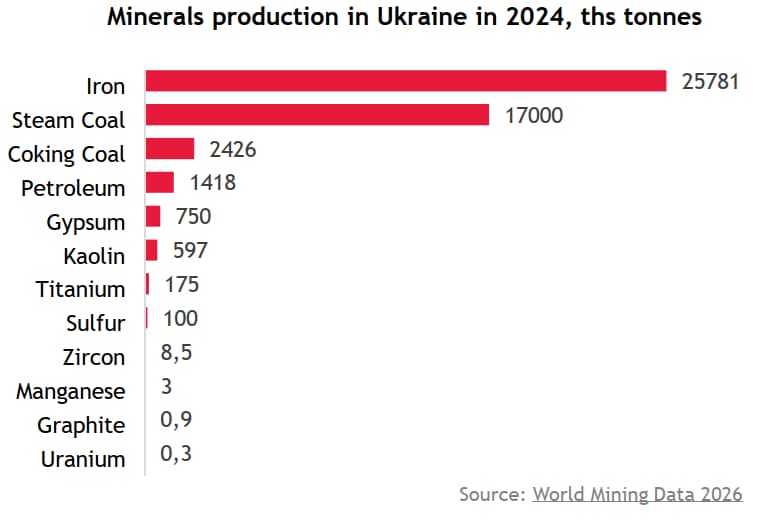
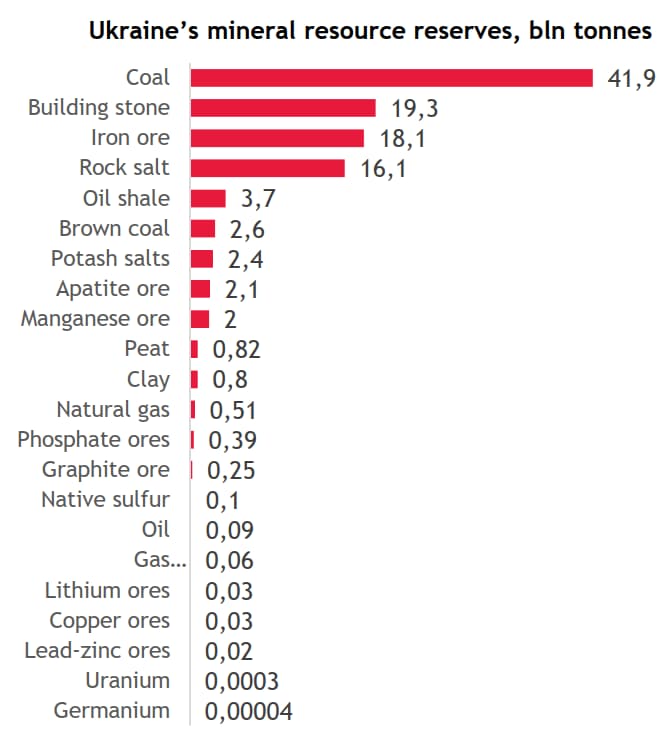
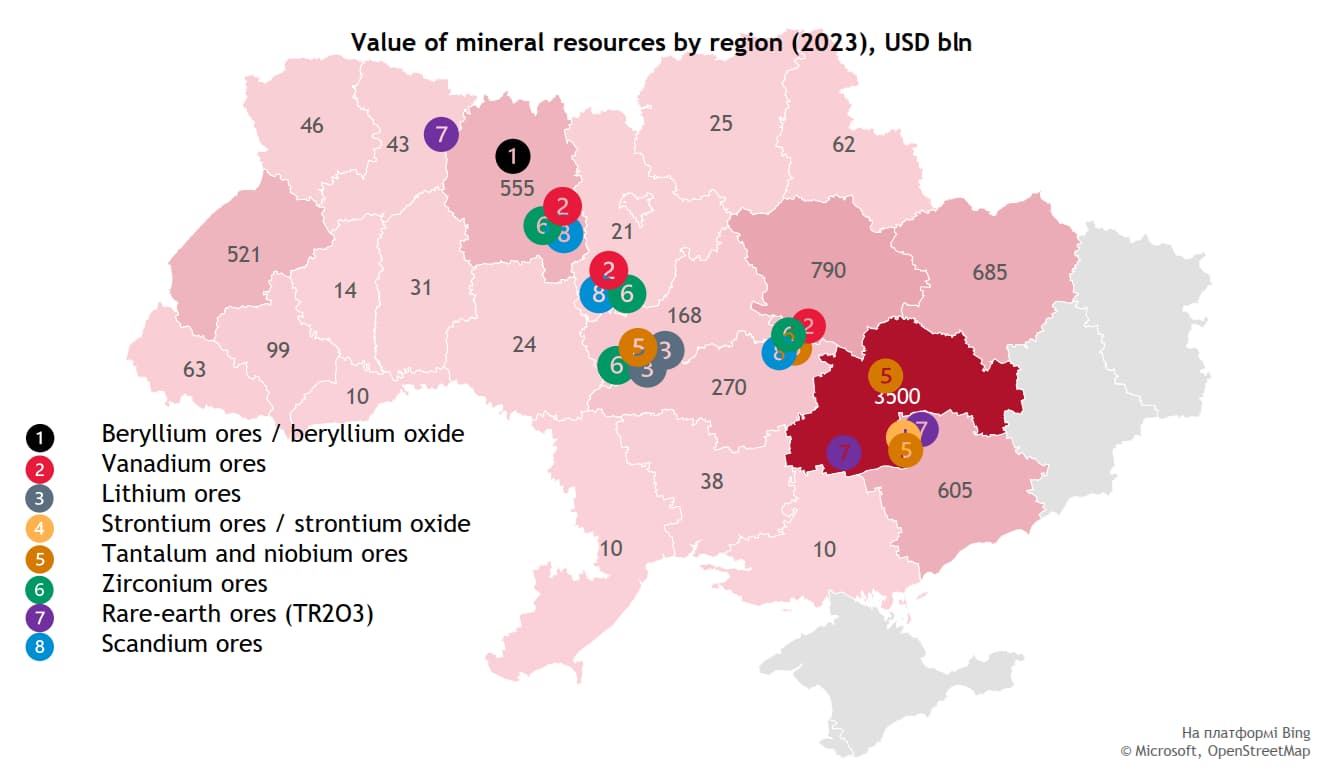
Ukraine holds deposits of 22 out of 34 minerals considered critical for the European Union. Before the war, the mining sector contributed over 6% of Ukraine’s GDP. Despite significant disruption caused by the occupation of mineral‑rich regions and key infrastructure, the country retains substantial proven reserves, a strong industrial base and a robust pipeline of more than 100 ongoing development projects.
M&A activity
Ukraine’s mining sector is seeing renewed M&A activity, especially around lithium, titanium, and rare‑earth assets. A major milestone was the privatization of the state‑owned United Mining and Chemical Company (UMCC)–Ukraine’s largest titanium producer–which was sold in 2024 for USD 6 mln
Raw material base
In 2025, Ukraine and the United States established the U.S.-Ukraine Reconstruction Investment Fund to support investment in critical minerals, hydrocarbons and related infrastructure. The Fund was initially capitalised with USD 150m, including a USD 75m commitment from the U.S. DFC matched by Ukraine, creating a dedicated platform to catalyse additional private investment.
Investment potential
Investment activity in the mining sector might be challenging due to insufficient deposit exploration and lack of reliable geological data, with martial law limiting its public availability even more. But an ongoing digitalization initiative aims to consolidate Ukraine’ geological archives.
Ukraine grants mining rights through state‑issued licenses, mainly awarded via mandatory electronic auctions, with Production Sharing Agreements available for strategic deposits. Exploration license holders receive a preferential right to obtain production licenses, and rights remain transferable except to sanctioned or high‑risk entities. Investors must secure land access separately and pay royalties and standard taxes. Foreign ownership is permitted, and most investors operate through Ukrainian LLCs, supported by financing from private, multilateral, and project‑finance sources.

IT
Market size (2025): USD 7.8 bln
Market overview
IT industry remains one of Ukraine’s five leading export sectors and maintains positive growth even in challenging external circumstances. In 2025 the export of IT services accounted for ~3.1% of the country's GDP.
As of 2025, Ukraine’s key partner countries included the USA, the United Kingdom, Switzerland, Germany, Israel and Poland, and also Malta and Cyprus acting as financial and corporate intermediaries
Key features
IT companies in Ukraine
Among IT companies in Ukraine 63% are domestic, 10% are foreign and 27% are subsidiaries of foreign. Outsourcing companies prevail in the market, but the product segment is also developing. TOP-5 largest IT companies in Ukraine: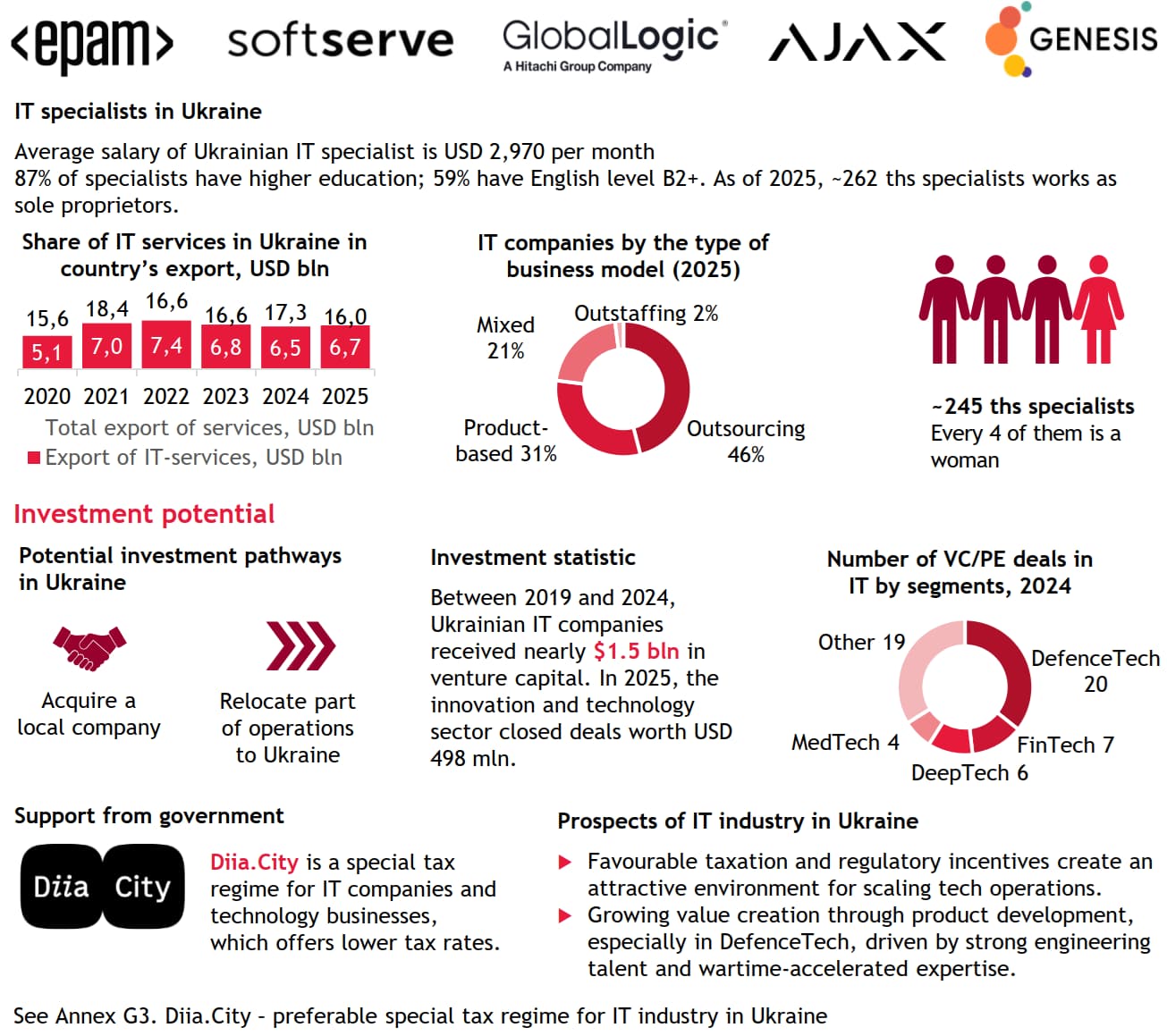
Defence
Market size (2025): USD 50 bln
Market overview
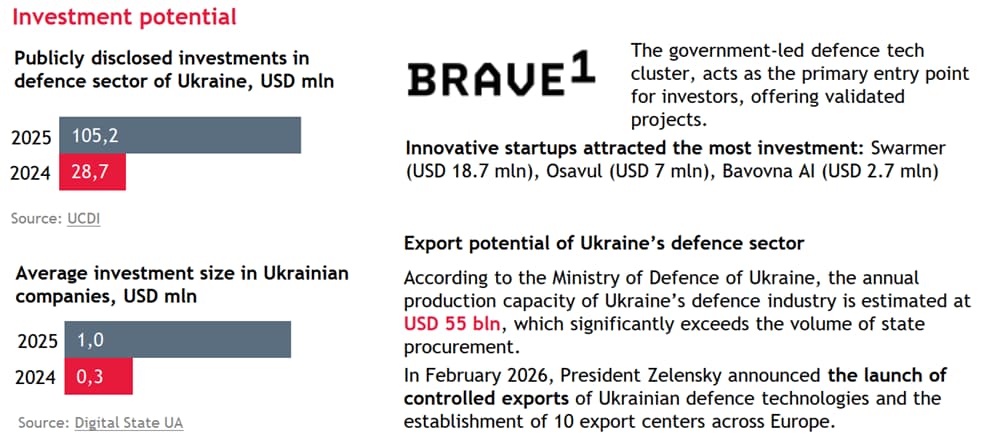
The defence industry is critical for Ukraine during the full-scale war. In 2025, output of state‑owned enterprises reached USD 4.32 bln, while faster private‑sector growth points to a total production potential of up to USD 50 bln. The government is the main customer in the defence sector. Exports are currently strongly limited by government.
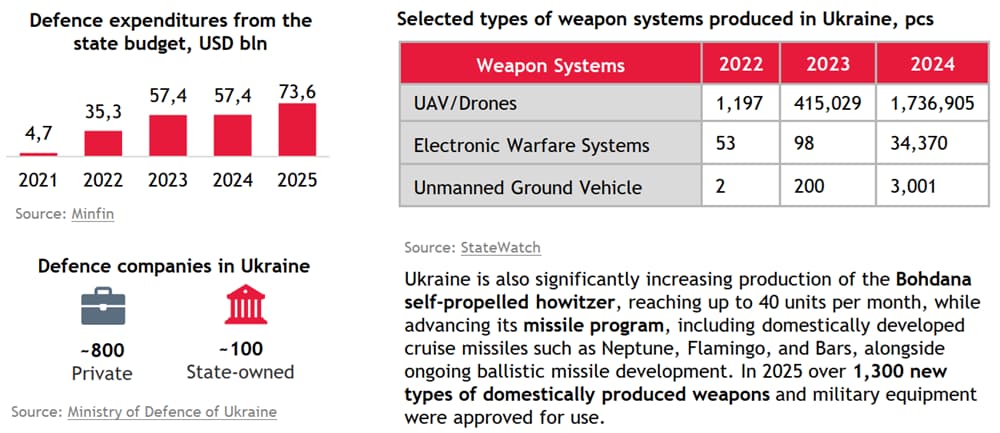
Domestic production covers over 50% of the Armed Forces’ needs, although material and technical base remains insufficient and the country continues to rely on imported components and international aid. The sector remains relatively immature yet is rapidly advancing, driven by strong competencies and a solid engineering knowledge base.
International cooperation
Intergovernmental assistance
Ukraine has concluded 29 bilateral security agreements with international partners as of 2026. Top supporters of Ukraine by aid relative to national budgets are Norway, Denmark, Sweeden, Estonia and Finland.
Funding mechanisms:
Private‑sector industrial partnership

Funding mechanisms:
Other opportunities of industry

Investment potential
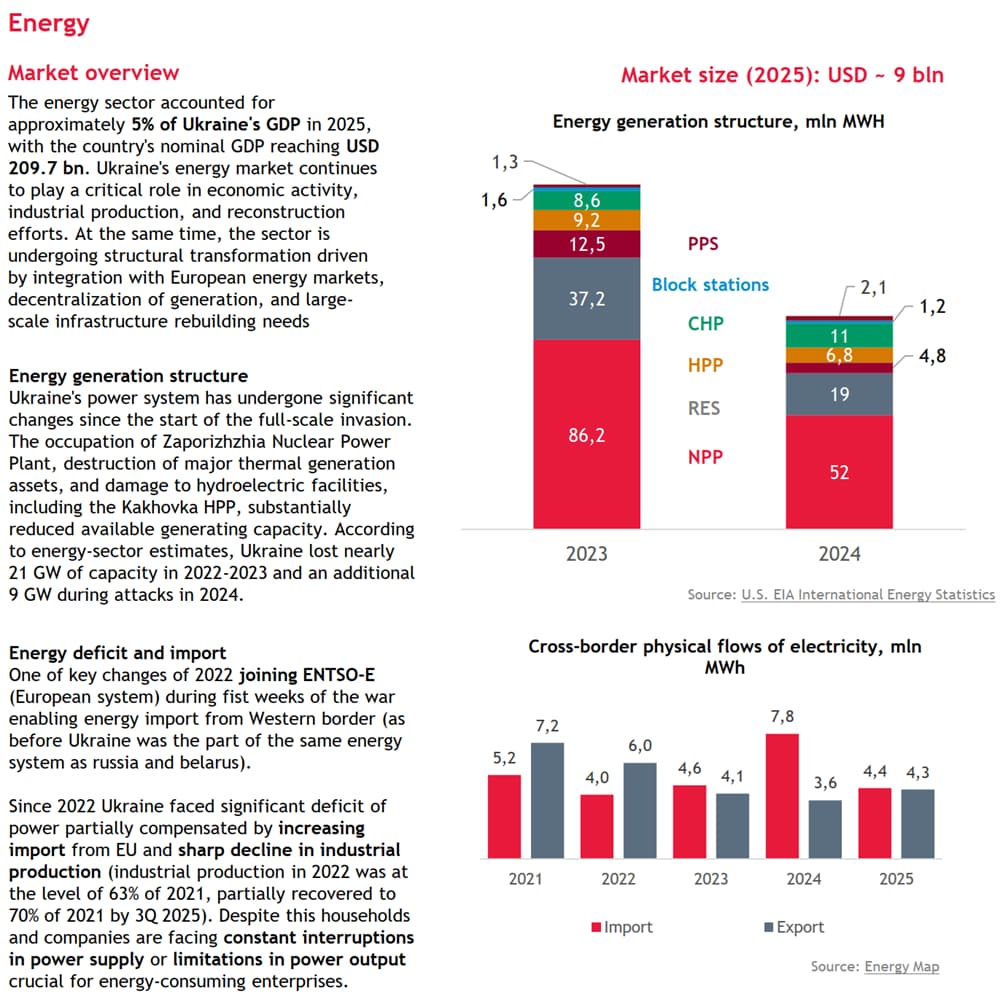
The energy sector remains one of the most war-affected industries, with reconstruction and recovery needs estimated at nearly USD 91 bln over the next decade. HPPs, TPPs, and CHP plants suffered the most, which dramatically reduced flexibility and increased system vulnerability. The system remained operational due to a broad network, diversified energy mix, and a workforce of 252,846 employees.
Ukraine’s transition toward a more decentralized and renewable‑oriented energy system is driving new investment opportunities. The state provides targeted support, including euro‑linked auctions for renewable electricity (USD 1.1 bln in 2025), and through the Law “On State Support of Investment Projects with Significant Investments in Ukraine,” offering incentives for biogas and biomethane projects.
Ukraine’s transition toward a more decentralized and renewable‑oriented energy system is driving new investment opportunities. The state provides targeted support, including euro‑linked auctions for renewable electricity (USD 1.1 bln in 2025), and through the Law “On State Support of Investment Projects with Significant Investments in Ukraine,” offering incentives for biogas and biomethane projects.
Estimated loss in generating capacities of more than 30 GW would be significant restriction for further recovery, while flexible generation capacities are among key challenges. In the next years Ukraine will significantly invest in:
Major investors remain active. South Korean company Posco International is building a USD 106 mln CHP plant in Odesa that will run on refuse‑derived fuel and produce 12 MW of electricity and 40 MW of heat. DTEK (the largest private investor in Ukraine's energy sector) has invested over EUR 12.5 bln in energy assets over the past 20 years, including EUR 1.64 bln in the development of renewable energy sources (RES). There are M&As as well: FTD Investments’ acquisition of solar power plants Bolokhiv Solar Park 1 and 2 with the total capacity of 33.35 MW.