

In professional services, the main resource and value is not a product on the shelf, but people’s time. It is the professionals’ time that is sold to clients; it is the basis on which team workloads are measured; and it is what determines whether a project delivers the margin originally anticipated.
And yet, in many companies, time is still scattered across different systems: the plan is in the manager’s spreadsheet, actual hours are in overdue reminders, holidays are in the calendar, and rates and work types are “somewhere in finance”. Until these elements are brought together into a single process, the business makes decisions based on expectations rather than reality.
Below is an overview of what a holistic employee time management process looks like: from workload planning to recording, monitoring and client service. At its heart lies the logic of the process and the benefits for partners, practice leaders and operational teams.
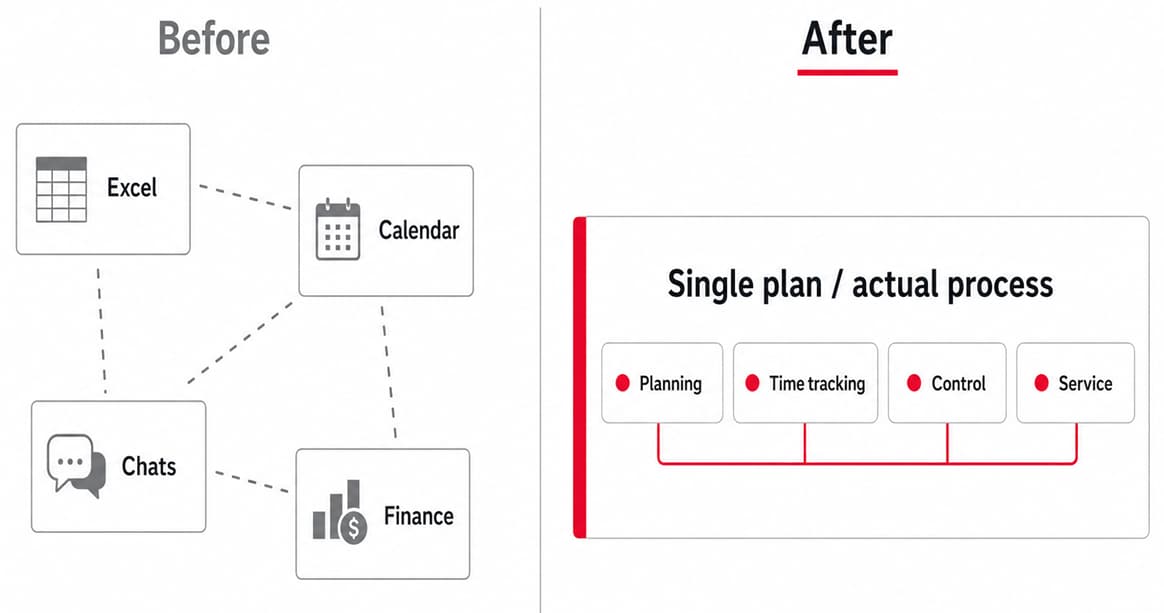 Figure 1. From fragmented sources to a single plan / actual process
When a company looks only at the facts, it always reacts too late. When it focuses only on the plan, it risks underestimating deviations from actual workload levels. Value emerges where the workload plan, time tracking, discipline in recording hours and absence tracking operate as a single cycle. It is precisely this cycle that provides with a real competitive advantage, enabling it to manage its key resource more effectively.
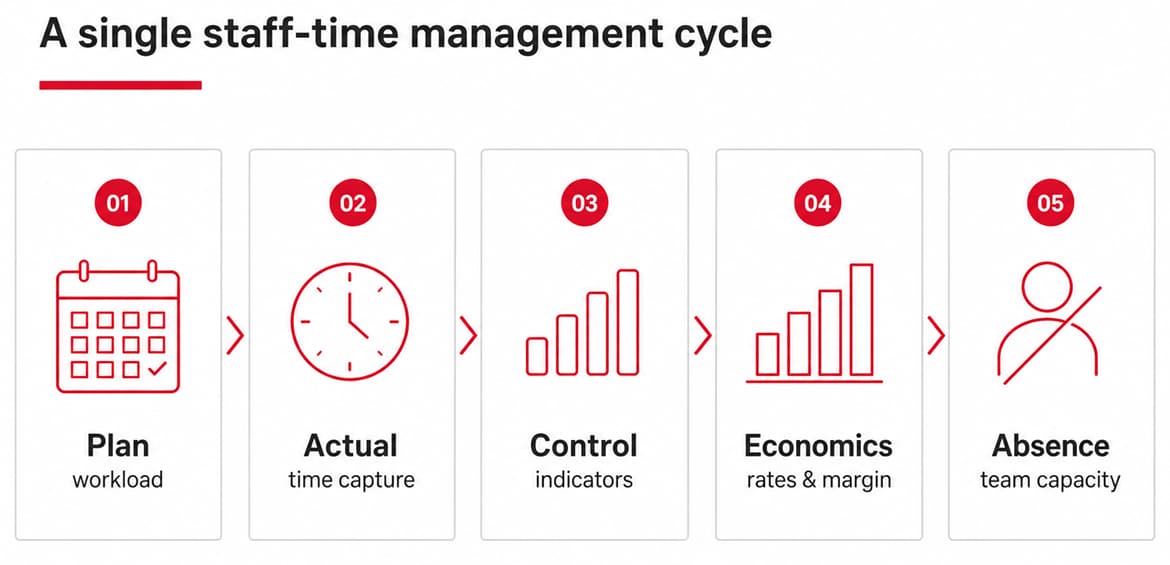
Figure 2. Five steps of a single staff-time cycle
Potential consequences. An employee may be assigned to several priority tasks at once, or their involvement may be scheduled for a period when they are unavailable. The consequences can include missed deadlines, unmet client commitments or excessive workload on the team.
A well-established planning process provides answers even before work begins:
Business benefits. Fewer surprises at the start of the week. Fewer instances where planned resources turn out to be unavailable. Fewer breaches of deadlines and commitments caused not by the quality of the work but by a lack of transparency regarding the team’s workload. A unified view of workload allows such risks to be identified and addressed as early as the planning stage, and planning itself ceases to depend on the manager’s personal oversight, becoming a transparent resource management tool.
In practice, this takes the form of a single workload matrix: people, days or weeks, projects and absence markers all in a single view. This enables you to identify conflicts in workload before they affect project deadlines or commitments to the client.
Potential consequences. Completed work is not recorded in the accounts in a timely manner. As a result, invoicing is delayed, the quality of planning and forecasting is reduced, and some hours worked remain unrecorded and are therefore not considered when assessing the project’s profitability.
The success of time tracking depends less on the tools used and more on having a clearly defined process:
Business benefits. Data required for client invoicing is generated in a timely manner. The assessment of the team’s workload is based on actual figures, rather than subjective estimates. The volume of manual checks prior to invoicing is reduced, and time worked is fully accounted for in the financial results of projects.
In other words: the firm stops losing track of time that has already been worked and sold to the client but has not been properly recorded in the accounting system.
Potential consequences. Assumptions such as “the team appears busy” cannot serve as a reliable basis for resource planning, preparing commercial proposals or making HR decisions. Until planned and actual figures are compared, the assessment of workload remains subjective, and problems can only be addressed after the reporting period has ended.
A mature approach provides management with clear indicators:
A partner does not need to analyse hundreds of rows of data. He or she receives an overview of the process’s status. A manager does not waste time checking on every employee, but focuses the attention on areas where signs of deviations are already apparent.
Business benefits. Compliance with time-tracking requirements becomes part of a managed process, rather than depending on the personal discipline of individual employees. The volume of manual checks and the management workload are reduced. Teams that are consistently delay the recording of time worked become visible early, allowing the company to improve client invoicing, forecasting quality and accountability in a timely manner. Deviations become visible while they can still be corrected without significant consequences for the business.
Practical outcome: monitoring of working time remains comfortable for employees, while ensuring the necessary level of managerial discipline and data quality for decision-making.
Potential consequences. Without an understanding of the structure of time worked and its cost, it is easy to form a misleading impression of work efficiency. A team may be fully occupied, yet at the same time, projects may fail to achieve their expected level of profitability.
Therefore, the time management process should necessarily include an economic component:
Business benefits. Partners see not only the amount of time spent, but also its impact on the project’s financial outcome. Projects become more comparable with one another, and decisions regarding pricing, team composition and the allocation of priorities are based on clear economic indicators rather than on a subjective perception of workload. The focus is not only on the number of hours worked, but also on the value those hours create for the business.
This also has a positive effect for the company’s clients: a more transparent internal project economy facilitates more informed planning, a more stable service and better priority management.
Potential consequences. Internal chaos surrounding holidays and cover arrangements quickly becomes an external quality issue: a client may only find out that a key specialist is unavailable when it is already too late to do anything about it.
A mature process ensures that information regarding absences:
Business benefits. Service delivery becomes more predictable. There are fewer instances where an employee’s unavailability is only discovered too late. The team has more time to plan for a replacement or redistribute the workload, which helps to ensure continuity of customer service and the stable fulfilment of obligations.
In professional services, reputational risks often arise not due to a lack of expertise, but because of shortcomings in operational planning: a client is promised a specific team composition, but a key specialist turns out to be unavailable at a critical moment.
Employee
Works to a more predictable rhythm: he or she understands the tasks, planned workload and reporting deadlines, and can see that absences have been factored into the work schedule. This reduces the number of chaotic enquiries about availability and helps avoid stress at the end of the reporting period.
Manager
Has up-to-date information on the team’s workload and records of time actually worked. This allows him or her to redistribute the workload in a timely manner, identify potential problems and respond to them before they affect the fulfilment of commitments to the client.
Partner / Practice leader
Gains a comprehensive managerial overview: the level of time-tracking discipline, team workloads, potential risks and the impact of resource utilisation on project economics. This allows them to focus on decision-making rather than manually monitoring individual operations.
Operations / Finance
Receives more accurate and timely data for client invoicing, performance analysis and profitability assessment. The need for manual data preparation and reconciliation for management reporting is reduced.
When all stakeholders can see their part of the process, resource management becomes systematic rather than relying on the efforts of individual staff members.
To effectively capture both planned and actual hours within a single framework, organisations need a shared operational platform. For many professional companies, this role is fulfilled by the Microsoft ecosystem, particularly Dynamics 365 and the Power Platform. Rather than being just another timesheet tool, it provides an integrated environment that brings together:
The business value is clear: planned and actual data no longer reside in separate systems, while decisions related to resource allocation, billing, and client service are based on a single up-to-date information. This is how workforce management becomes not just a stated objective, but an embedded day-to-day business practice.
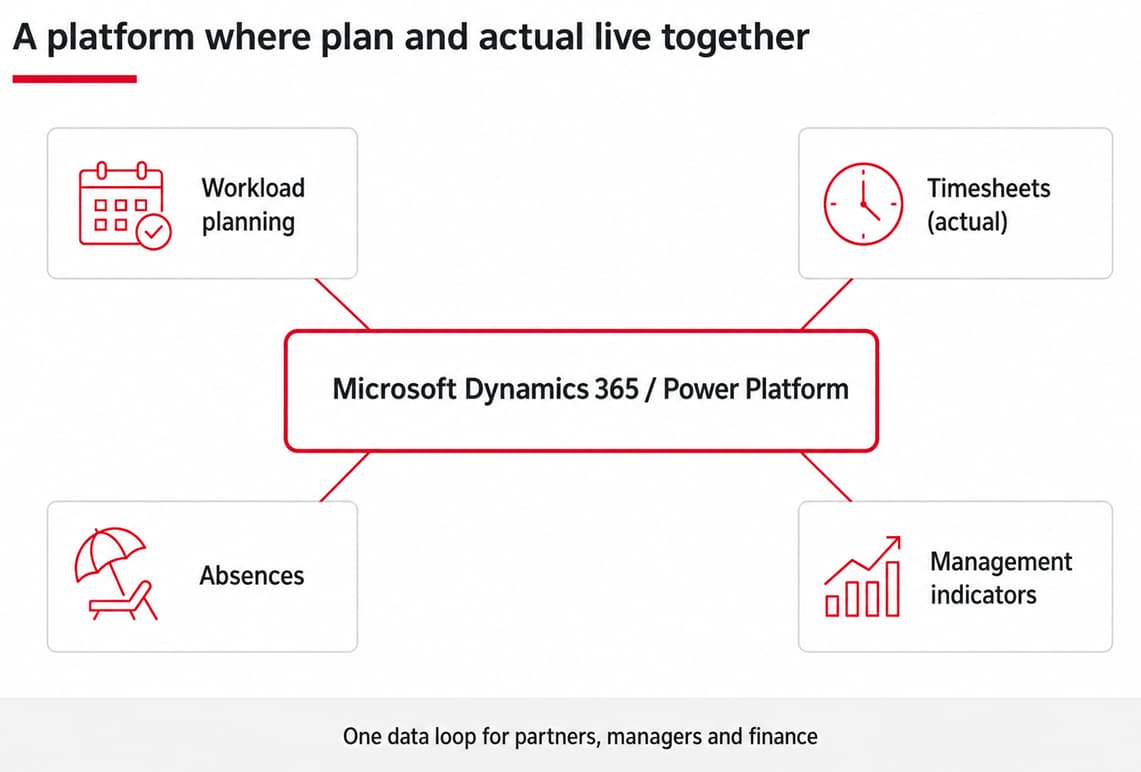 Figure 3. Microsoft Dynamics 365 / Power Platform as a single plan / actual contour
Once the company has established a comprehensive process for managing staff working hours, the first noticeable results are usually:
This is not the result of additional monitoring or new reports. It is the result of a holistic approach, in which the entire time-utilisation cycle — from planning to performance evaluation — becomes transparent and manageable.
A professional business sells expertise, but its economics are ultimately driven by how effectively its specialists’ working time is utilised. Therefore, competitive advantage often lies not in adopting yet another service methodology, but in having clear operational visibility: who is available, who is busy, what work has been completed, where risks are emerging, and how these factors affect profitability and client service quality.
A unified approach to managing staff time is not about control for its own sake. Rather, it enables firms to:
Staff time is a professional company’s key resource. If the processes of planning, time tracking, monitoring discipline and managing absences are not integrated, the business gradually loses profitability due to inefficient use of resources and limited visibility into how those resources are managed. When these processes are integrated into a single workflow, the workforce capacity becomes easier to manage.
At that point, working hours are transformed from mere data in a report into a manageable business resource that directly influences the company’s efficiency and effectiveness.
BDO in Ukraine provides business process automation and Microsoft solutions implementation services that help organisations bring planning, time and resource management, analytics, and operational processes together within a single integrated system. Contact us to make your processes more transparent and your management decisions more data-driven and informed.
And yet, in many companies, time is still scattered across different systems: the plan is in the manager’s spreadsheet, actual hours are in overdue reminders, holidays are in the calendar, and rates and work types are “somewhere in finance”. Until these elements are brought together into a single process, the business makes decisions based on expectations rather than reality.
Below is an overview of what a holistic employee time management process looks like: from workload planning to recording, monitoring and client service. At its heart lies the logic of the process and the benefits for partners, practice leaders and operational teams.
Figure 1. From fragmented sources to a single plan / actual process
Why simply filling in timesheets is no longer enough
A timesheet is merely a record of what has already happened. It answers the question “what has already been done”, but says nothing about what is more important:- whether a person is even available on that day
- whether a person is booked onto two projects at the same time
- whether work overlaps with holiday time
- whether the team is clocking off on time, or “catching up” on the month’s hours in the last three days
- whether the hours reported to management accurately reflect the project’s economics.
When a company looks only at the facts, it always reacts too late. When it focuses only on the plan, it risks underestimating deviations from actual workload levels. Value emerges where the workload plan, time tracking, discipline in recording hours and absence tracking operate as a single cycle. It is precisely this cycle that provides with a real competitive advantage, enabling it to manage its key resource more effectively.
Five steps that form a single process
Each step is aimed at eliminating losses that arise between planning, carrying out the work and recording it.Figure 2. Five steps of a single staff-time cycle
1. Planning staff deployment
First, time is allocated in the plan: it is determined who will work on the project, on which days, how many hours will be devoted to the task, and who will be responsible for the outcome.Potential consequences. An employee may be assigned to several priority tasks at once, or their involvement may be scheduled for a period when they are unavailable. The consequences can include missed deadlines, unmet client commitments or excessive workload on the team.
A well-established planning process provides answers even before work begins:
- team members’ availability
- scheduled periods of absence
- risks of double-booking; and
- sufficiency of team resources to deliver the work within the deadlines agreed with the client.
Business benefits. Fewer surprises at the start of the week. Fewer instances where planned resources turn out to be unavailable. Fewer breaches of deadlines and commitments caused not by the quality of the work but by a lack of transparency regarding the team’s workload. A unified view of workload allows such risks to be identified and addressed as early as the planning stage, and planning itself ceases to depend on the manager’s personal oversight, becoming a transparent resource management tool.
In practice, this takes the form of a single workload matrix: people, days or weeks, projects and absence markers all in a single view. This enables you to identify conflicts in workload before they affect project deadlines or commitments to the client.
2. Recording actual time worked
Planning alone does not guarantee accurate data on work performed. Therefore, the second step in the process is the timely recording of the actual time worked by the staff who carried out the tasks.Potential consequences. Completed work is not recorded in the accounts in a timely manner. As a result, invoicing is delayed, the quality of planning and forecasting is reduced, and some hours worked remain unrecorded and are therefore not considered when assessing the project’s profitability.
The success of time tracking depends less on the tools used and more on having a clearly defined process:
- an employee understands what time needs to be recorded and according to what principles
- a manager has up-to-date information on the status of time tracking without the need for additional enquiries or manual checks
- time is recorded according to a defined schedule (weekly or per reporting period), rather than being postponed until the end of the month.
Business benefits. Data required for client invoicing is generated in a timely manner. The assessment of the team’s workload is based on actual figures, rather than subjective estimates. The volume of manual checks prior to invoicing is reduced, and time worked is fully accounted for in the financial results of projects.
In other words: the firm stops losing track of time that has already been worked and sold to the client but has not been properly recorded in the accounting system.
3. Maintaining discipline without micromanagement
Even high-quality accounting loses its effectiveness if there is no way to identify deviations in the process in a timely manner. At the same time, control should not turn into daily, detailed monitoring of every employee’s work.Potential consequences. Assumptions such as “the team appears busy” cannot serve as a reliable basis for resource planning, preparing commercial proposals or making HR decisions. Until planned and actual figures are compared, the assessment of workload remains subjective, and problems can only be addressed after the reporting period has ended.
A mature approach provides management with clear indicators:
- where processes and reporting function properly
- where additional attention is required
- where risks arise for the team, a project or the reporting period.
A partner does not need to analyse hundreds of rows of data. He or she receives an overview of the process’s status. A manager does not waste time checking on every employee, but focuses the attention on areas where signs of deviations are already apparent.
Business benefits. Compliance with time-tracking requirements becomes part of a managed process, rather than depending on the personal discipline of individual employees. The volume of manual checks and the management workload are reduced. Teams that are consistently delay the recording of time worked become visible early, allowing the company to improve client invoicing, forecasting quality and accountability in a timely manner. Deviations become visible while they can still be corrected without significant consequences for the business.
Practical outcome: monitoring of working time remains comfortable for employees, while ensuring the necessary level of managerial discipline and data quality for decision-making.
4. Analysing the economics of working time
Not all working hours create the same value for the business. Some time is directly linked to carrying out client projects and generating revenue. The rest is spent on internal processes, training or administrative tasks. At the same time, rates, workload patterns and the criteria used to assess project performance are constantly changing. Therefore, to ensure an accurate analysis, it is important to ensure that data is comparable over time.Potential consequences. Without an understanding of the structure of time worked and its cost, it is easy to form a misleading impression of work efficiency. A team may be fully occupied, yet at the same time, projects may fail to achieve their expected level of profitability.
Therefore, the time management process should necessarily include an economic component:
- the types of work on which working time is spent
- how the hours worked relate to rates and expected profitability
- whether data from different periods is sufficiently comparable to allow for accurate analysis without significant deviation.
Business benefits. Partners see not only the amount of time spent, but also its impact on the project’s financial outcome. Projects become more comparable with one another, and decisions regarding pricing, team composition and the allocation of priorities are based on clear economic indicators rather than on a subjective perception of workload. The focus is not only on the number of hours worked, but also on the value those hours create for the business.
This also has a positive effect for the company’s clients: a more transparent internal project economy facilitates more informed planning, a more stable service and better priority management.
5. Treating absences as part of resource planning
Holidays, company days off and sick leave are not barriers to planning, but part of the team’s actual resources. If information about personnel absences is not integrated into workload and project planning, the management risks allocating work to people who are unavailable during that period.Potential consequences. Internal chaos surrounding holidays and cover arrangements quickly becomes an external quality issue: a client may only find out that a key specialist is unavailable when it is already too late to do anything about it.
A mature process ensures that information regarding absences:
- is recorded in a single workload planning system
- is considered when preparing commercial proposals for a client
- is agreed upon and communicated through a single process, rather than via scattered emails or verbal agreements.
Business benefits. Service delivery becomes more predictable. There are fewer instances where an employee’s unavailability is only discovered too late. The team has more time to plan for a replacement or redistribute the workload, which helps to ensure continuity of customer service and the stable fulfilment of obligations.
In professional services, reputational risks often arise not due to a lack of expertise, but because of shortcomings in operational planning: a client is promised a specific team composition, but a key specialist turns out to be unavailable at a critical moment.
How the process looks for different roles
It is important to assess not individual functions or tools, but the practical value the process creates for each role within the organisation.Employee
Works to a more predictable rhythm: he or she understands the tasks, planned workload and reporting deadlines, and can see that absences have been factored into the work schedule. This reduces the number of chaotic enquiries about availability and helps avoid stress at the end of the reporting period.
Manager
Has up-to-date information on the team’s workload and records of time actually worked. This allows him or her to redistribute the workload in a timely manner, identify potential problems and respond to them before they affect the fulfilment of commitments to the client.
Partner / Practice leader
Gains a comprehensive managerial overview: the level of time-tracking discipline, team workloads, potential risks and the impact of resource utilisation on project economics. This allows them to focus on decision-making rather than manually monitoring individual operations.
Operations / Finance
Receives more accurate and timely data for client invoicing, performance analysis and profitability assessment. The need for manual data preparation and reconciliation for management reporting is reduced.
When all stakeholders can see their part of the process, resource management becomes systematic rather than relying on the efforts of individual staff members.
Where planning meets actual performance
The process described above can be managed through spreadsheets, calendars and email exchanges. However, as soon as planning, actual performance, absences, and oversight are handled in separate systems, the process begins to break down, and the business reverts to making decisions based on assumptions rather than facts.To effectively capture both planned and actual hours within a single framework, organisations need a shared operational platform. For many professional companies, this role is fulfilled by the Microsoft ecosystem, particularly Dynamics 365 and the Power Platform. Rather than being just another timesheet tool, it provides an integrated environment that brings together:
- project resource planning
- regular recording of actual time worked
- leave and absence management
- management indicators for leaders and partners to monitor workforce discipline and resource utilisation.
The business value is clear: planned and actual data no longer reside in separate systems, while decisions related to resource allocation, billing, and client service are based on a single up-to-date information. This is how workforce management becomes not just a stated objective, but an embedded day-to-day business practice.
Figure 3. Microsoft Dynamics 365 / Power Platform as a single plan / actual contour
What changes first
Real change begins not with large-scale transformations, but with the gradual improvement of day-to-day processes.Once the company has established a comprehensive process for managing staff working hours, the first noticeable results are usually:
- Fewer scheduling conflicts at the start of the week: availability and absences are visible in advance.
- Higher rates of timely completion: not through additional monitoring, but through clear rules and a consistent process.
- More efficient client invoicing: the need for manual adjustments and corrections at the end of the period is reduced.
- Targeted management decisions: attention is focused on high-risk areas, rather than being spread evenly across all processes.
- More transparent resource planning: decisions regarding recruitment, project prioritisation and client commitments are based on the team’s actual workload, rather than on assumptions.
This is not the result of additional monitoring or new reports. It is the result of a holistic approach, in which the entire time-utilisation cycle — from planning to performance evaluation — becomes transparent and manageable.
A professional business sells expertise, but its economics are ultimately driven by how effectively its specialists’ working time is utilised. Therefore, competitive advantage often lies not in adopting yet another service methodology, but in having clear operational visibility: who is available, who is busy, what work has been completed, where risks are emerging, and how these factors affect profitability and client service quality.
A unified approach to managing staff time is not about control for its own sake. Rather, it enables firms to:
- plan workloads in line with business needs
- record actual hours worked promptly
- identify deviations before they affect performance
- analyse the cost-effectiveness of working time utilisation
- maintain a high standard of service even when a team member is absent or overloaded.
Staff time is a professional company’s key resource. If the processes of planning, time tracking, monitoring discipline and managing absences are not integrated, the business gradually loses profitability due to inefficient use of resources and limited visibility into how those resources are managed. When these processes are integrated into a single workflow, the workforce capacity becomes easier to manage.
At that point, working hours are transformed from mere data in a report into a manageable business resource that directly influences the company’s efficiency and effectiveness.
BDO in Ukraine provides business process automation and Microsoft solutions implementation services that help organisations bring planning, time and resource management, analytics, and operational processes together within a single integrated system. Contact us to make your processes more transparent and your management decisions more data-driven and informed.