
Valeriy Afanasyev
Valuation Partner
The valuation of assets for financial reporting is a critical area that ensures the accurate reflection of an entity’s carrying amount in its financial statements. Proper valuation of assets fosters business transparency, increases investor confidence, and ensures compliance with international and national standards.
Main stages of BDO in Ukraine’s valuation process:
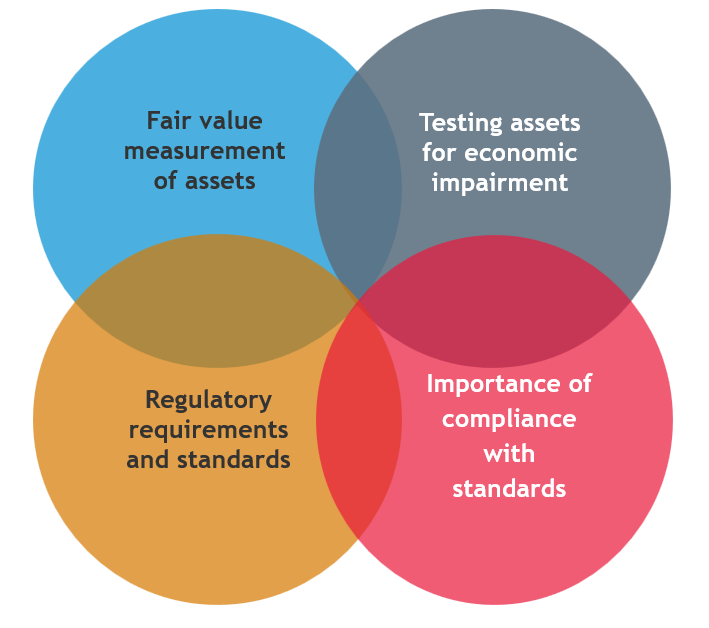
1. Fair value measurement of assets
Fair value is defined as the price that would be received to sell an asset or paid to transfer a liability in an orderly transaction in the principal or most advantageous market.
Valuation methods:
It is used to value assets such as property, plant and equipment, investment property, intangible assets, and financial instruments.
2. Testing assets for economic impairment
The objective of the test is to determine whether the value of an asset has decreased to the extent that it exceeds its estimated recoverable amount.
The impairment test is conducted in the following steps:
1. Identifying impairment signs:
2. Estimating the recoverable amount:
The higher of the following values is chosen:
3. Recognition of an impairment loss if the carrying amount (of property, plant and equipment or other assets) exceeds its recoverable amount.
Relevant for assets such as intangible assets with indefinite useful life, property, plant and equipment, investments in subsidiaries or associates.
3. Regulatory requirements and standards
To evaluate assets, companies are guided by International Financial Reporting Standards (IFRS) and National Accounting Standards of Ukraine (NAS):
The BDO network is a sponsor of the International Valuation Standards Council (IVSC), an independent, non‑profit international standard‑setting organisation that develops the International Valuation Standards (IVS) in the interests of transparency, consistency, and trust in valuation across global markets. For our clients, this means working with a team that integrates the requirements of IFRS 13, IAS 36, and national valuation standards with leading international valuation approaches, thereby enhancing the robustness, comparability, and credibility of results when determining the fair value of assets and performing impairment testing.
4. Practical significance
Importance of compliance with standards
Compliance with international standards, such as IAS, IFRS 13, and national requirements, contributes to the correct reflection of the carrying value of assets and maintains a stable financial position of an entity. Correct valuation of assets also ensures:
Asset valuation is a reliable tool for improving the analysis of an entity’s financial condition and making management decisions based on accurate indicators.
Only experienced professionals should be relied upon to perform financial valuation of assets for financial reporting purposes. Contact experts of BDO in Ukraine, and we guarantee accuracy, transparency, and compliance with international standards.