BDO in Ukraine Has Launched Initiative To Develop Digital Accounting Skills To Support Ukraine’s Recovery
BDO in Ukraine presented the initiative “Digital Accounting Skills for Ukraine’s Recovery” during the Skills Alliance Coordination Meeting in Kyiv.
The initiative was shortlisted as part of the Skill Partnerships for Productivity programme and was given the opportunity to be presented to participants at the Skills Alliance Coordination Meeting. The concept was presented on behalf of BDO in Ukraine by Irina Knyzhnikova, Head of BDO Academy. In total 8 companies have been selected for the Skill Partnerships initiative. These partnerships have the potential to mobilise up to €1,6 million in investment for skills development.
Our proposal is driven by a very practical challenge of Ukraine’s recovery: investment in infrastructure, energy, manufacturing and community development will require more than just funding and engineering expertise. To implement a large number of projects, specialists will be needed who are capable of working with modern digital accounting systems, financial and management reporting, monitoring the use of funds and meeting the requirements of international partners.
That is why BDO in Ukraine has suggested creating a practical part-qualification/certification programme in digital accounting, focused on the practical skills required by employers.
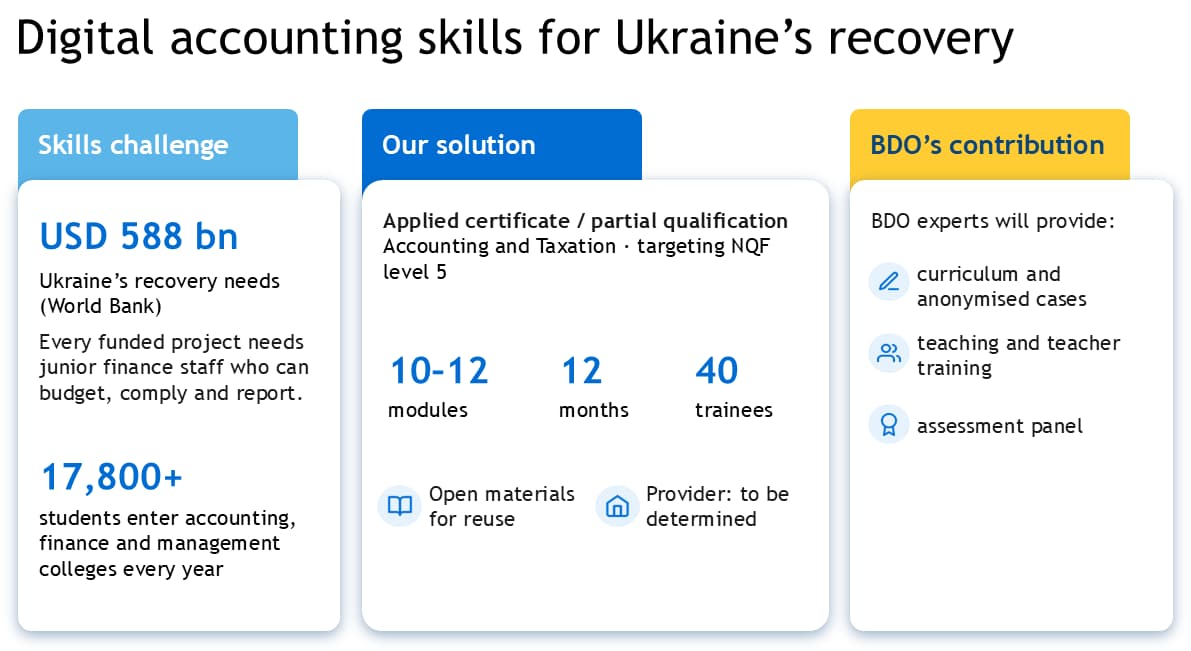
The suggested model comprises 10–12 training modules over 12 months and includes training of the first group of approximately 40 participants. The programme aims to combine the core professional competencies of an accountant with modern digital tools and practical experience working on practical business cases.
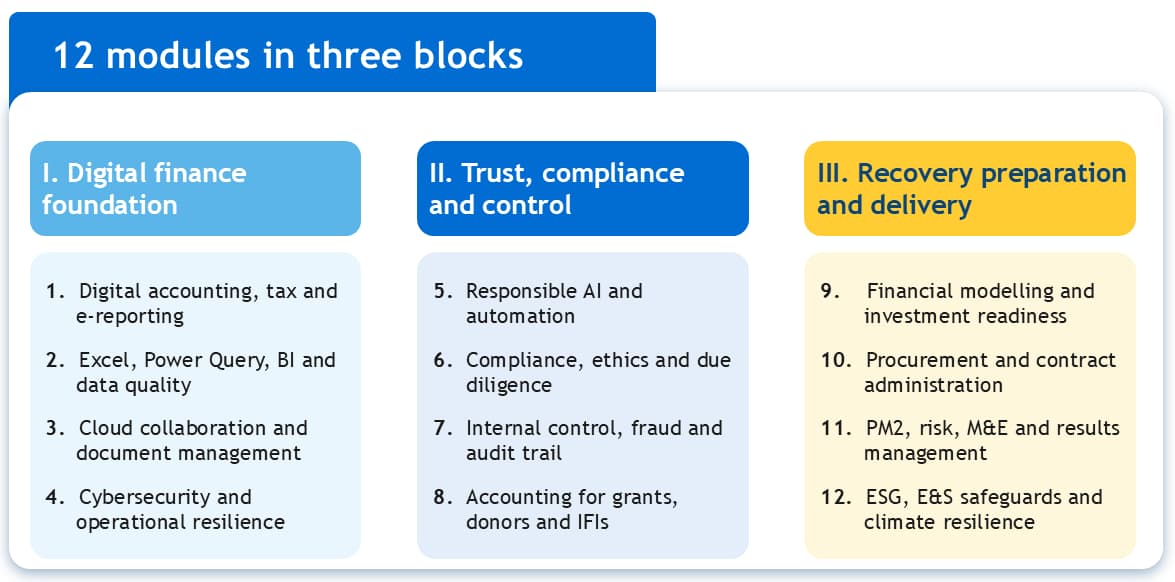
Proposed programme areas:
- digital accounting and use of modern accounting/ERP systems
- automation of financial and accounting processes
- practical application of AI and digital tools for finance professionals
- financial and management reporting
- internal control, transparency and proper documentation of transactions
- practical case studies relating to recovery projects and the use of international funding.
A key principle of the suggested model is the link between vocational education and real-world business practice. BDO’s experts are ready to contribute to the development of the curriculum and practical case studies, the training of lecturers and mentors, and the assessment of learning outcomes. The teaching materials are to be designed with a view to their future reuse.
For us, this initiative is part of a broader vision for Ukraine’s recovery. Behind the large-scale assessments of recovery needs lies more than just the question of capital. Every funded project requires people with the skills to manage funds effectively, ensure transparency, reporting and operate in accordance with modern professional standards.
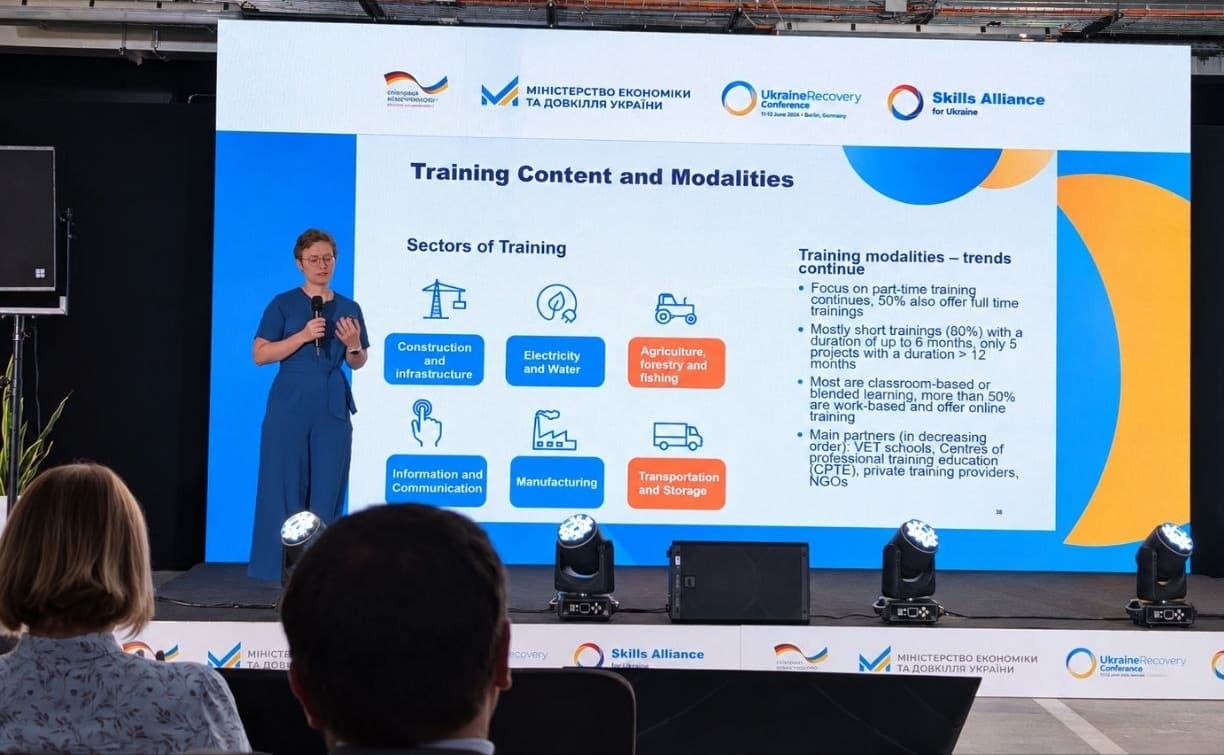
At the event Mirjam Zimmermann, the Adviser for the Skills Alliance in Ukraine — presented the key areas and formats of vocational training in Ukraine. The main sectors covered include construction and infrastructure, energy and water supply, agribusiness, IT and communications, manufacturing, transport and logistics. Current trends include short-term programmes, flexible learning that can be combined with work, and blended and online formats.
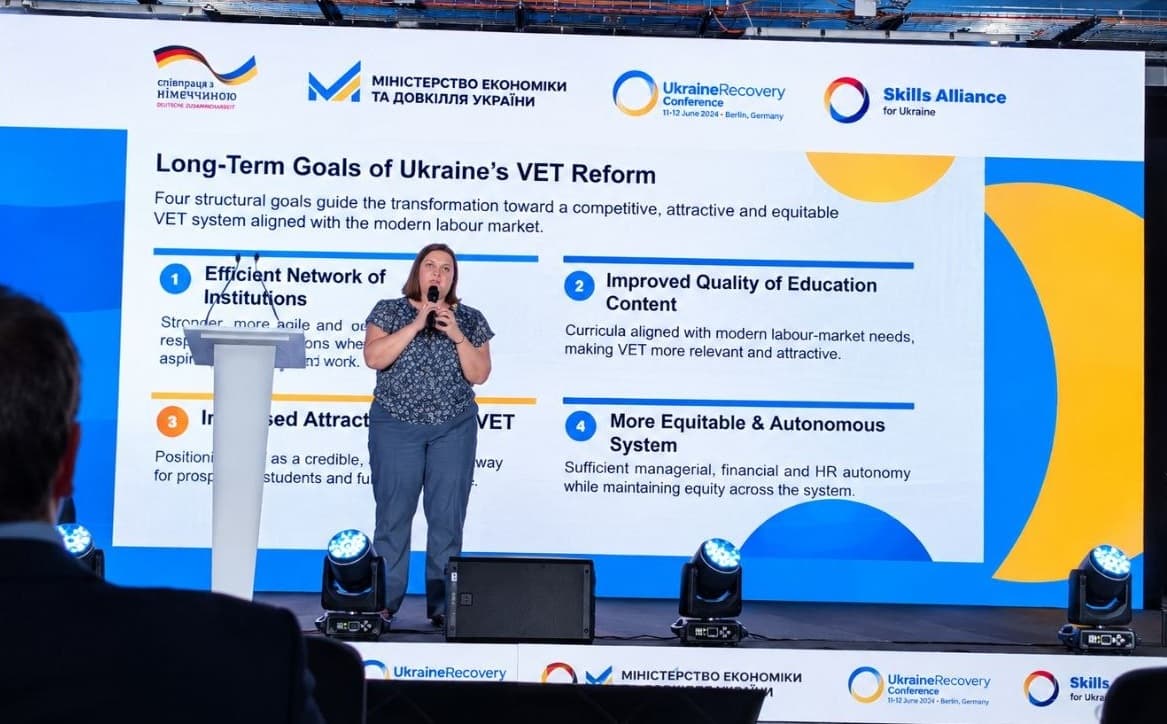
Iryna Shumik, Director General of the Directorate of Vocational Education at the Ministry of Education and Science of Ukraine, presented the long-term objectives of vocational education and training (VET) reform in Ukraine. The main focus is on improving the quality of education, enhancing its attractiveness, and ensuring its alignment with the evolving needs of the labour market.
Dariia Marchak, Deputy Minister of Social Policy of Ukraine, presented her vision for the development of the vocational skills system in Ukraine. Key priorities include: reforming the vocational training and reskilling system, modernising the educational infrastructure, developing lifelong digital learning, and creating a more flexible model of talents training capable of responding more quickly to the needs of employers and the labour market.
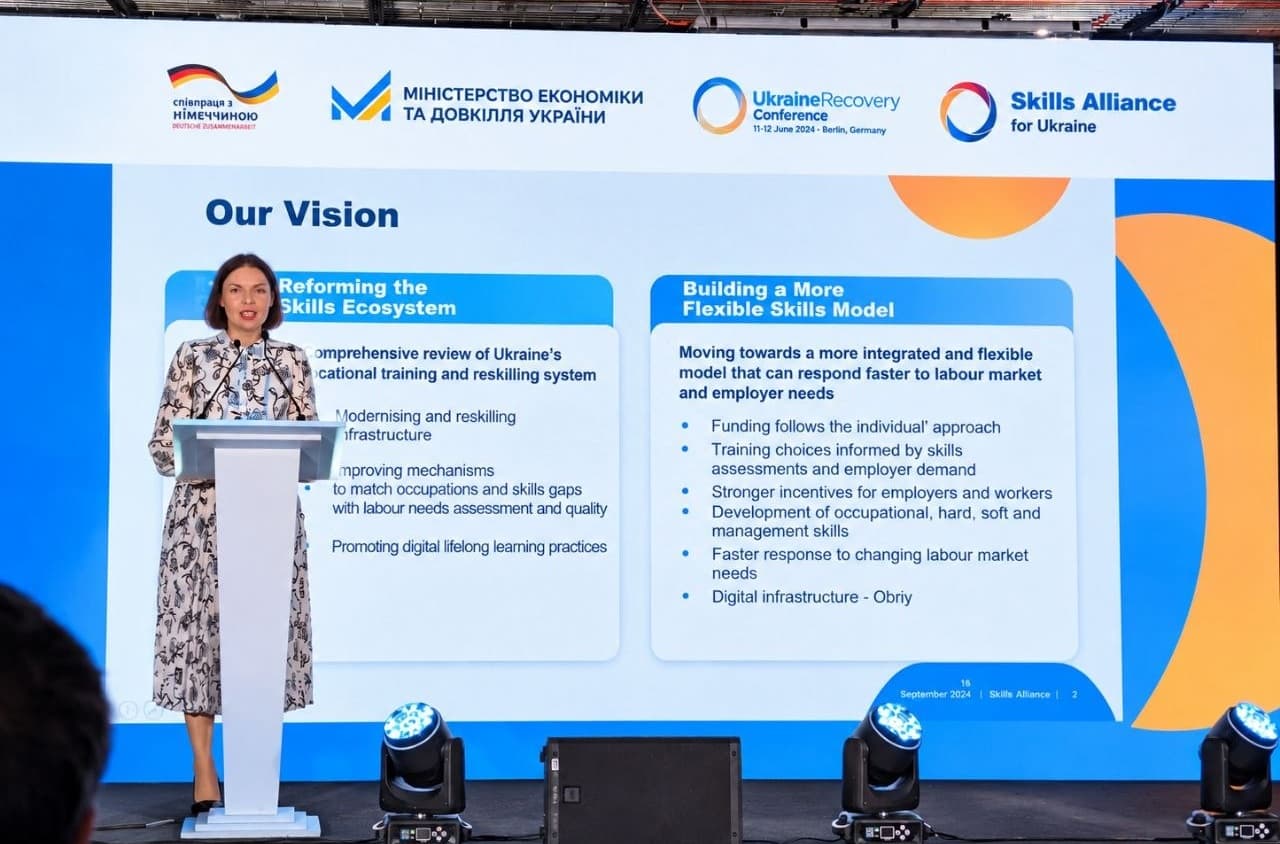
Based on the outcomes of the “Skills Alliance Coordination Meeting”, it can be concluded that the development of vocational and digital skills is becoming one of the key elements in Ukraine’s preparations for large-scale recovery. The implementation of infrastructure, energy, manufacturing and other projects will require not only funding but also a sufficient number of specialists who possess up-to-date practical skills and can work in line with the requirements of businesses and international partners.
Initiative of BDO in Ukraine to develop digital accounting skills addresses this need by combining professional accounting knowledge, digital tools, automation, AI, financial reporting and practical case studies related to recovery. This approach can help bridge the gap between professional education and the real needs of employers, as well as improve the transparency and quality of project management.
A separate area of development for young professionals is internship programme at BDO in Ukraine for students in economics and business disciplines. It provides an opportunity to gain initial practical experience, better understand how professional teams work and develop the skills required by modern business.
Programme coordinators Oleksii Kuznetsov and Vira Savchenko regularly hold introductory and orientation sessions with students from higher education institutions, familiarising them with professional development opportunities, BDO’s working practices and career prospects in the fields of audit, accounting, finance and consultancy.
BDO in Ukraine will continue to develop the programme’s concept in collaboration with educational partners, business community and participants of Skills Alliance. We are open to cooperation with organisations interested in developing modern professional skills, training staff and strengthening Ukraine’s capacity to implement recovery projects.